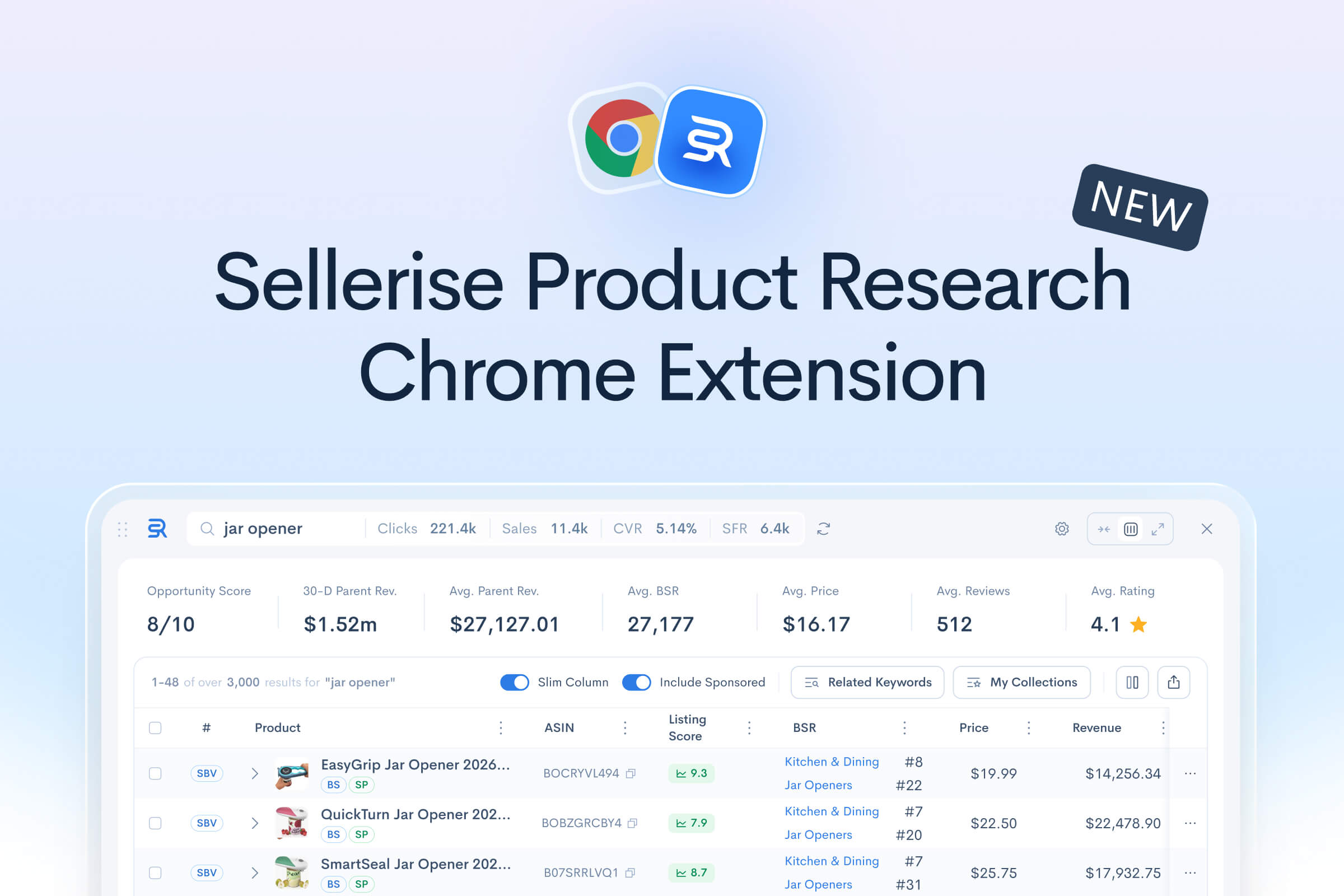
Amazon Product Research: The Complete Guide (with Sellerise Chrome Extension)

Sellerise Team, Contributor

12 min read -

Updated:

Product research is where every successful Amazon business starts.

Before you think about launching, sourcing, improving a listing, or running PPC, you need to answer one question:

Is this product worth selling in the first place?

That sounds simple, but most sellers get it wrong. They chase products based on intuition, copy what is already trending, or rely on incomplete data. That usually leads to one of two outcomes: entering a market with no real demand or entering one where the competition is too strong to beat.

Good product research helps you avoid both.

It shows you whether people are already buying a product, how competitive the niche is, where current listings are weak, what customers like and dislike, and whether there is still room for you to build a stronger offer. Done correctly, product research helps you stop guessing and start making decisions based on real market behavior.

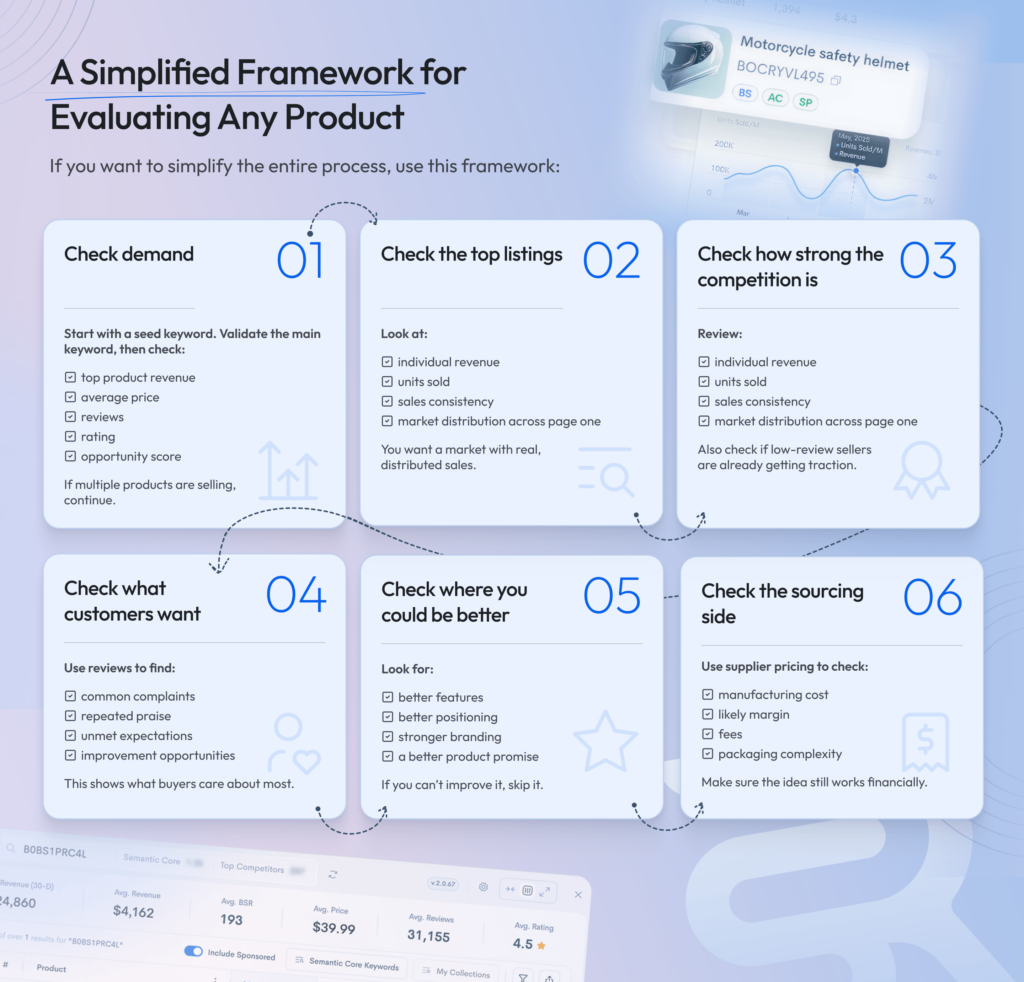
In this guide, we’ll walk through a practical step-by-step process for researching Amazon products using the Sellerise Chrome Extension directly on Amazon. This is not just a feature walkthrough. It is a real product validation workflow you can use before committing time, money, or inventory.


What Is Amazon Product Research?

Amazon product research is the process of evaluating a product idea and its market before deciding whether to sell it.

That evaluation usually includes questions like:

  • Is there enough demand?
  • How much revenue are top sellers making?
  • Are products still selling consistently?
  • How strong are the listings in this niche?
  • What do customers like and dislike?
  • Can I realistically improve the current offer?
  • Is there enough margin left after sourcing and fees?

The goal is not to find a “cool” product. The goal is to find a product with proven demand, manageable competition, and a realistic path to differentiation.


Why Amazon Product Research Matters

A lot of Amazon sellers think the hardest part is ranking a product. In reality, the hardest part is choosing the right product to begin with.

If you pick the wrong niche, no amount of optimization will save it. You can have strong images, solid copy, and decent PPC execution and still struggle because the product itself was a weak bet.

Strong product research helps you:

  • validate that customers are actively buying in the niche
  • avoid dead or declining products
  • spot oversaturated markets before you enter them
  • find weak points in top listings
  • discover what customers still want but are not getting
  • estimate whether the product can be sourced profitably

In other words, product research reduces risk. It helps you eliminate weak ideas early and go deeper only on products that show real potential.


Before You Start: What Good Product Research Should Tell You

A solid product research process should give you clear answers to four things:

1. Demand

Are people buying this product consistently?

2. Competition

How difficult will it be to enter this niche?

3. Improvement Potential

Can you create a better offer than what is already on page one?

4. Profitability

Can you source and sell this product at a margin that makes sense?

If you can answer all 4 clearly, you are no longer casually browsing product ideas. You are doing actual market research.


Step 1: Start With a Seed Keyword

The easiest way to begin is with a broad product keyword – something a shopper would naturally type into Amazon.

Examples:

  • ‘dog nail grinder’
  • ‘portable blender’
  • ‘pill organizer’
  • ‘black seed oil’

But here is the key: don’t assume your first keyword is automatically the right one.

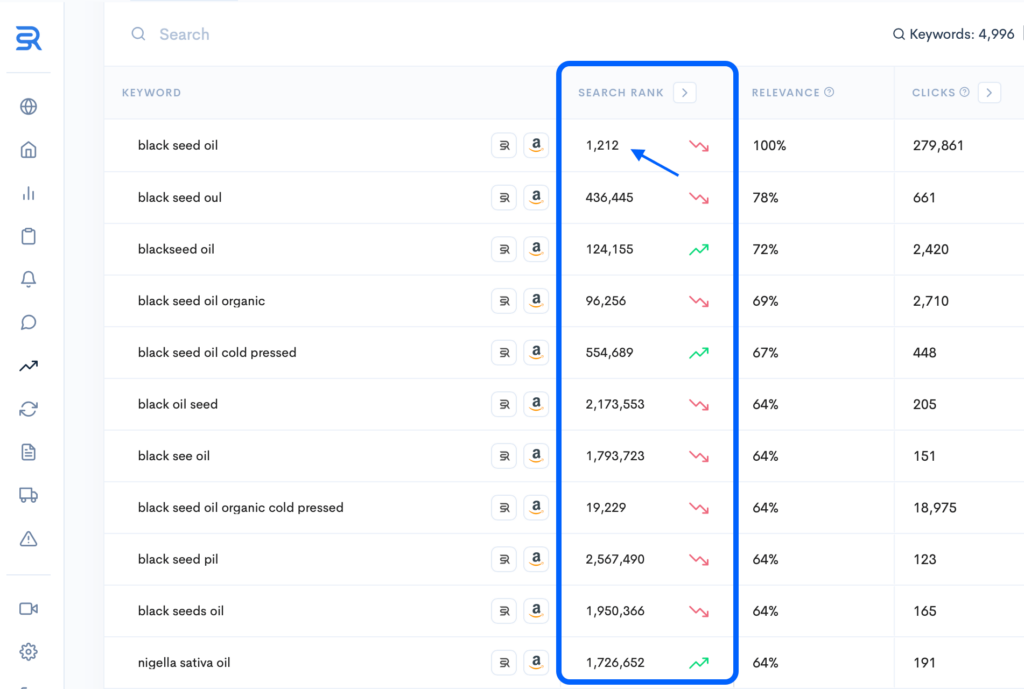
A better approach is to start with a seed keyword, then validate it using keyword data. In Sellerise Keyword Hunter, you can check which search terms actually carry the strongest demand in the niche. This helps you identify the true main keyword instead of relying on guesswork.

When validating the keyword, look for:

  • search frequency or search rank strength (the lower the search rank – the better)
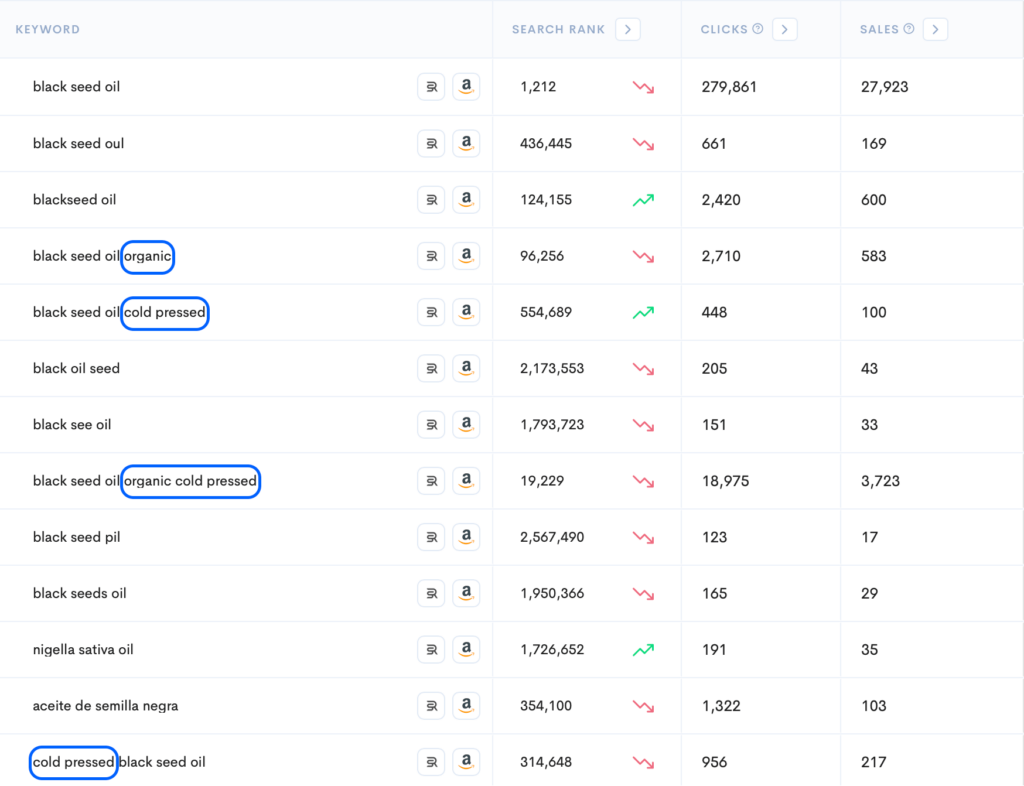
Sellerise keyword research table for a product showing search rank, relevance, clicks, and sales trend across related keywords.
  • closely related high-demand modifiers
  • repeated buying phrases across top terms
  • important product descriptors that appear again and again

For example, in a niche like black seed oil, it is not enough to see that “black seed oil” gets searched. You also want to notice repeated demand around modifiers like organic, cold pressed, or a specific product form like capsules. Those repeated phrases often tell you what buyers actually care about and what must be part of your product evaluation from the start.

This first step gives you 2 things:

  1. the main keyword that opens the niche
  2. the demand language buyers are already using

That makes the rest of your research much sharper.


Step 2: Search Amazon and Do a Fast Visual Niche Scan

Once you know the main keyword, search it directly on Amazon and start with a simple visual review of the niche.

This step matters more than many sellers realize.

Before diving into numbers, scan page 1 and ask:

  • What product forms show up most often?
  • Are there clear bestsellers?
  • Are sponsored listings dominating the top?
  • Are the products visually differentiated or all starting to look the same?
  • Are there obvious patterns in packaging, claims, size, or positioning?

This quick scan helps you understand what kind of market you are actually entering.

For example, a visual scan can reveal:

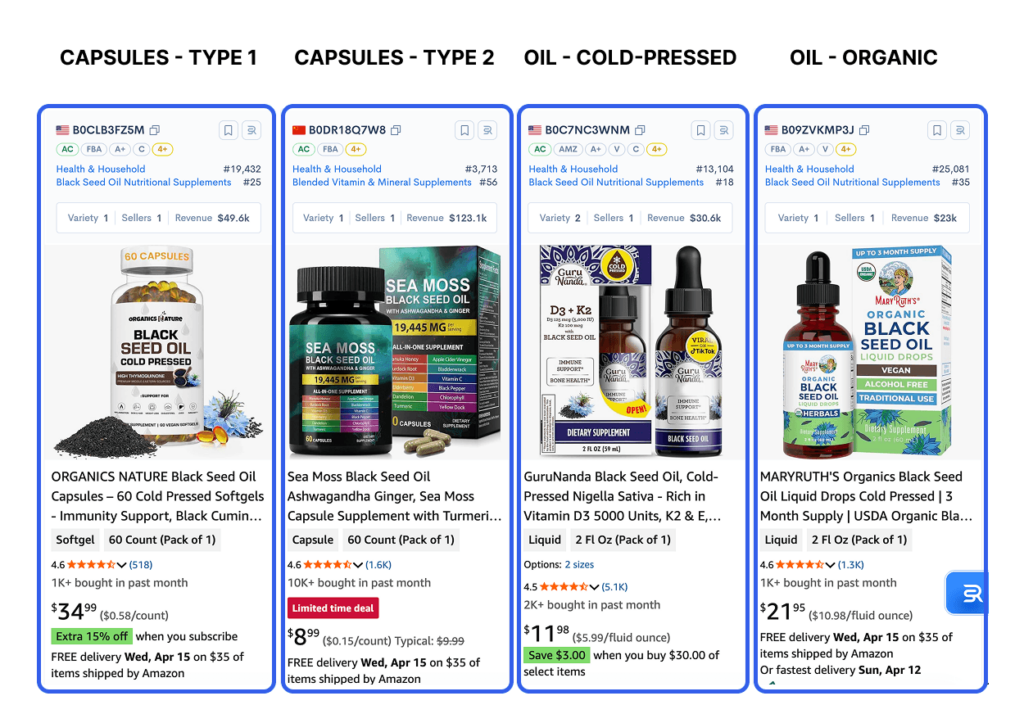
  • whether liquid, capsule, gummy, or bundle formats are competing in the same space
Amazon search results comparing different types of products with revenue and category data.
  • whether one brand dominates with very high review counts
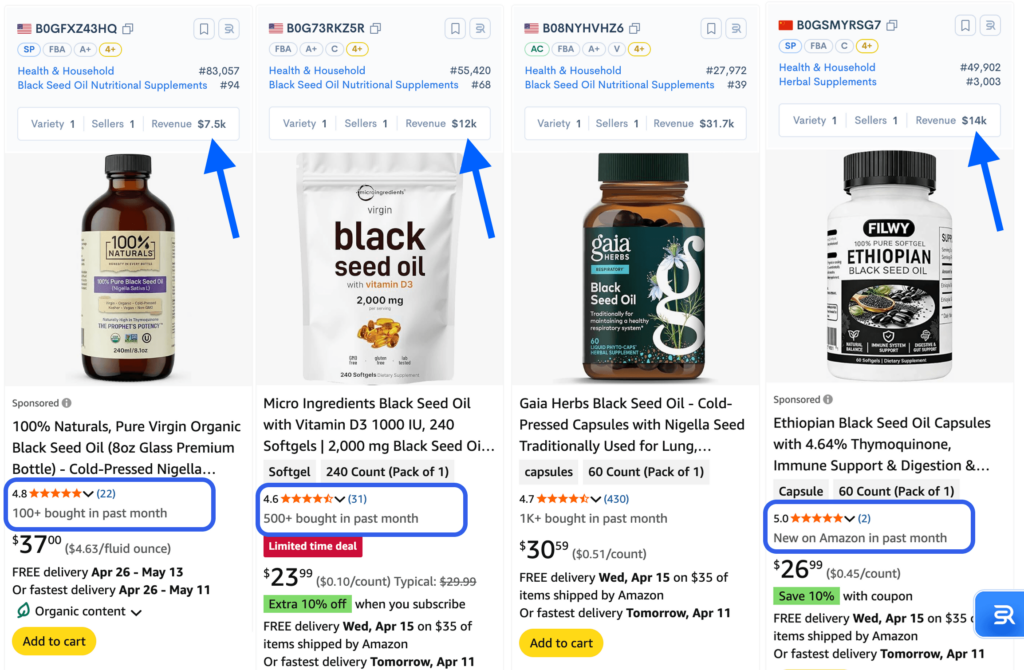
  • whether there are newer brands already appearing near the top
Amazon product listings with highlighted revenue, ratings, reviews, and monthly sales indicators.
  • whether top listings look repetitive and boring, which may signal room to stand out with better design

This is also where you start noticing repeated front-end claims. If words like organic, cold pressed, vegan, or non-GMO show up over and over on page 1, that is not random. It usually means those attributes are already part of buyer expectations in the category.

A visual scan will not make the decision for you, but it gives you early signals about format, competition style, and branding opportunity before you go deeper.


Step 3: Check Whether Demand Is Real

Once you enter a niche, the first real question is simple: do people actually buy this product?

You are not looking for one lucky seller. You want to see whether multiple products in the market are generating meaningful sales.

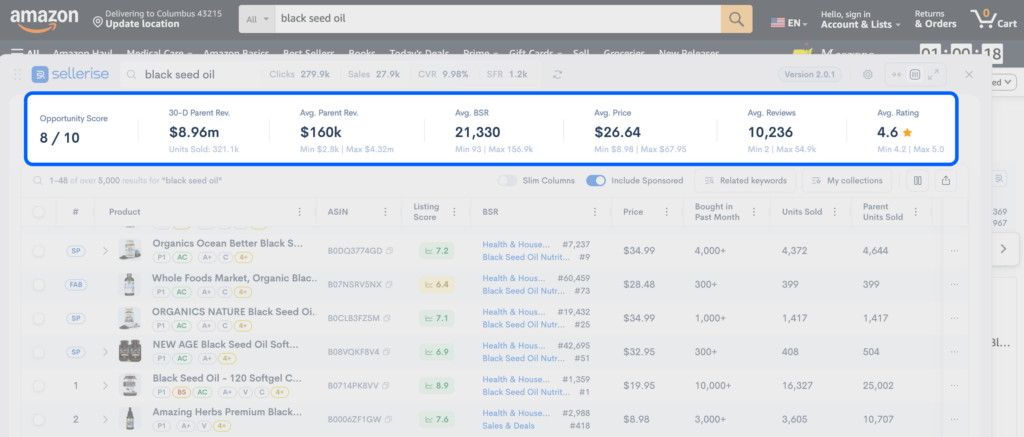
With the Sellerise Chrome Extension, review the niche-level data and check:

  • opportunity score
  • average price
  • average reviews
  • average rating
  • top product revenue
  • units sold across leading products
Sellerise Chrome Extension market opportunity analysis showing Amazon niche metrics and opportunity score

Then go one level deeper and ask:

  • Are several listings generating strong sales?
  • Is demand distributed across multiple sellers?
  • Are there enough units sold across page 1?
  • Does the price level support margin?

A healthy niche usually does not depend on one superstar listing alone. It has multiple products generating solid revenue and consistent order volume. The more distributed the demand is, the healthier the market tends to be.

If only one product is selling and everyone else is weak, that is a warning sign. If several sellers are moving volume, the niche is more likely to be alive and accessible.


Step 4: Check Whether Products Are Still Selling

Some products had a good run 6 months ago. That does not mean they are still worth entering today.

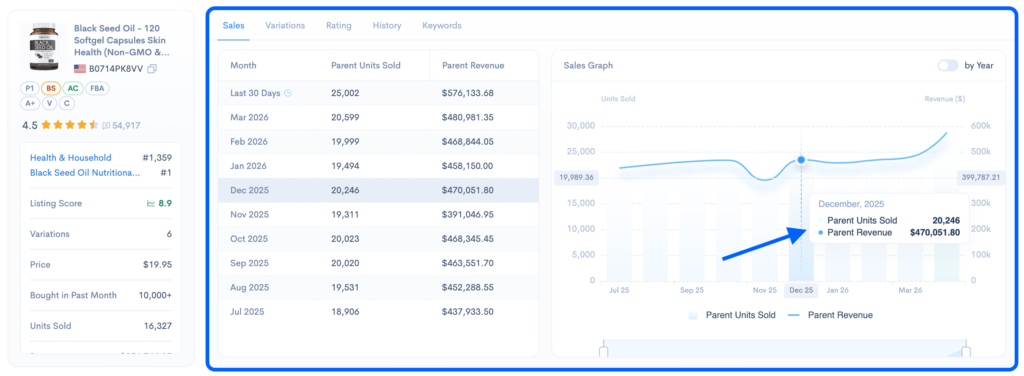
That is why you should never stop at surface-level revenue. Open strong listings and check whether sales are still consistent over time.

Look for:

  • steady or improving sales
  • stable revenue trend
  • no sharp recent drop
  • signs of seasonality
  • meaningful recent sales, not just old performance
Sellerise Chrome Extension sales history showing monthly Amazon units sold and revenue trend graph

This is one of the most overlooked parts of product research. A product can still look impressive on page one while quietly losing momentum in the background.

The best opportunities usually look like this:

  • stable demand over recent months
  • mild growth or steady performance
  • no one-time spike followed by collapse
  • enough consistency to make forecasting possible


Step 5: Validate Trend Stability Outside the Listing

Sales history inside Amazon matters, but it is smart to check demand behavior outside the listing too.

A niche with steady or gradually rising trend lines is usually much healthier than one with random bursts followed by long drop-offs. Sharp spikes can sometimes mean external traffic pushed temporary demand into the market, which is very different from stable buyer behavior.

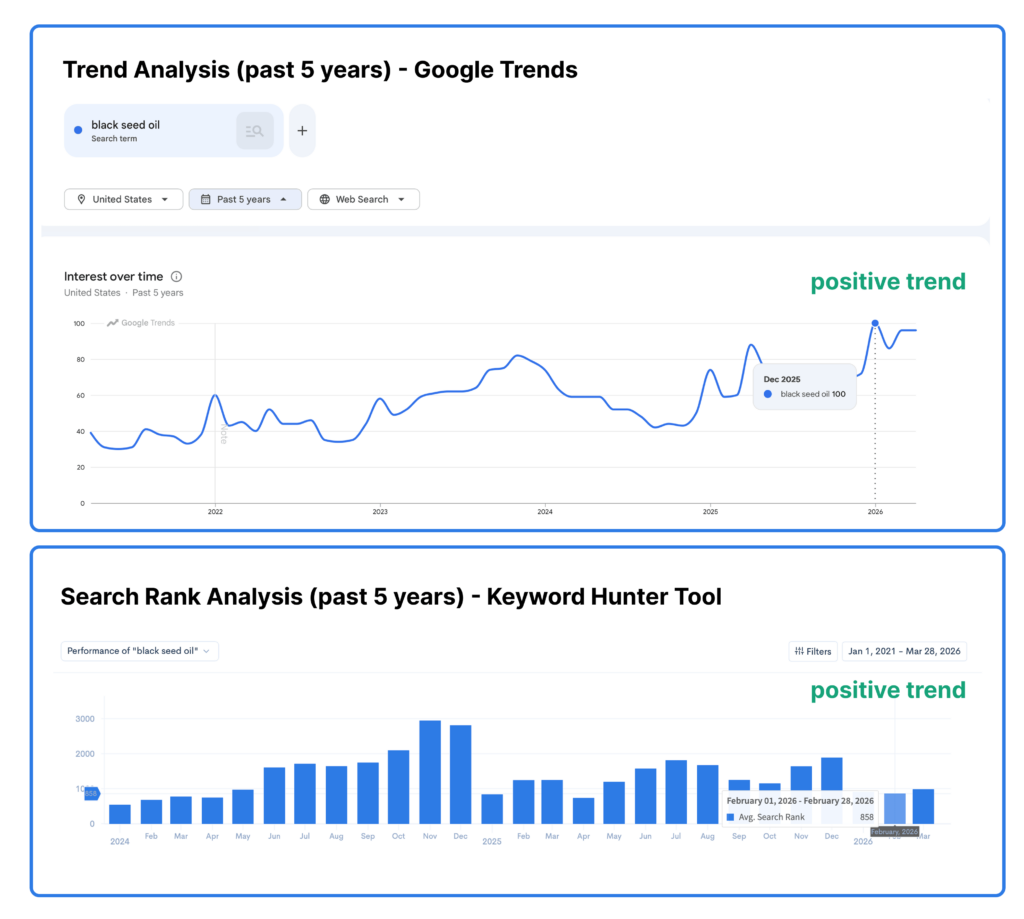
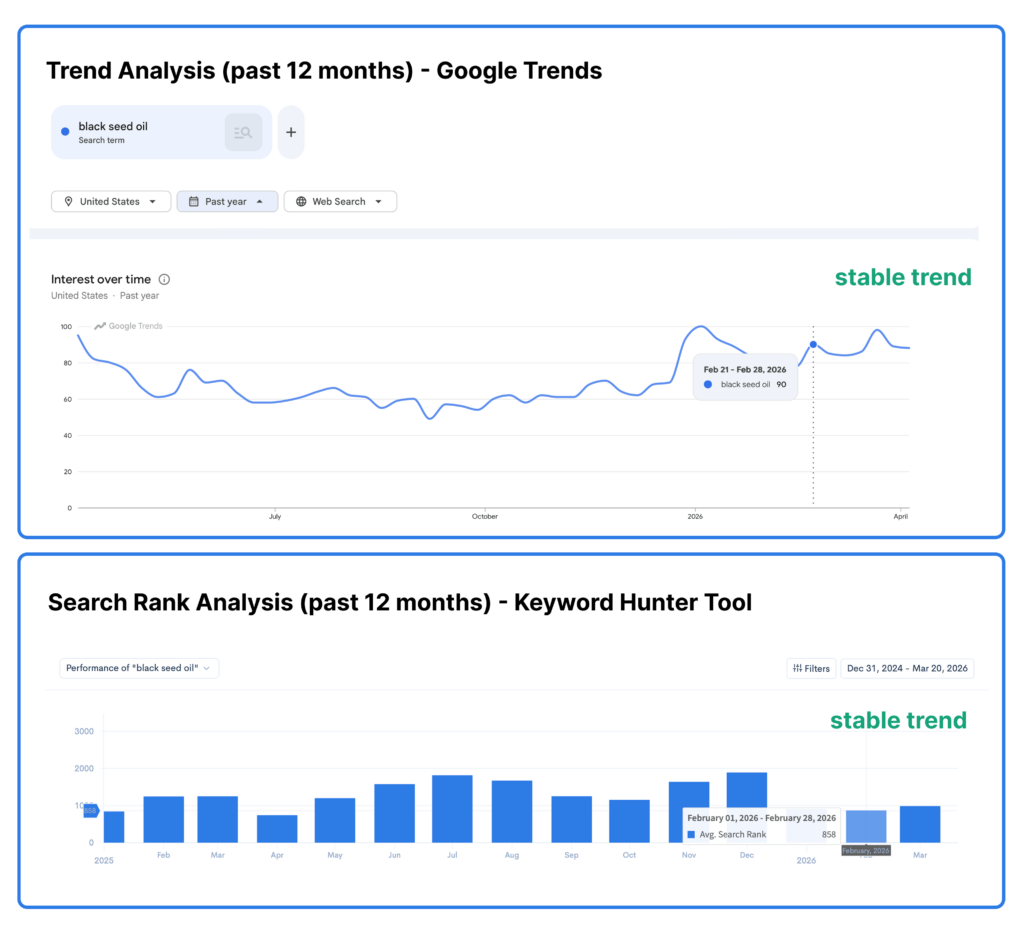
Use trend tools, like Google Trends and Keyword Hunter, to evaluate whether interest in the niche is stable, growing, or fading. This gives you a wider view of market behavior and helps you avoid confusing a temporary spike with a real opportunity.

What to look for:

  • 5-year trend direction
Trend analysis with Google Trends 5-year chart and Keyword Hunter search rank performance graph.
  • recent 12-month behavior
  • stable demand vs one-off spikes
  • whether the keyword trend on Amazon aligns with broader search behavior

If the broader search trend and the Amazon keyword trend both look stable, that is a strong sign you are dealing with a real market rather than temporary noise.


Step 6: Look at Low-Review Sellers

After validating demand, the next question becomes: can a newer seller realistically enter this niche?

One of the best ways to answer that is to study listings that are not yet fully established.

In addition to focusing on the biggest listings, look for products with:

  • relatively low review counts
  • recent launch signals
  • measurable sales or revenue
  • improving performance despite limited social proof
Amazon product listings with highlighted revenue, ratings, reviews, and monthly sales indicators.

This matters because strong demand does not automatically mean open opportunity.

If nearly all the revenue is concentrated among listings with thousands of reviews, the niche may be much harder to enter. But if products with 30 reviews, 300 reviews, or 500 reviews are already getting traction, that tells you something important: customers are still willing to buy from newer offers.

That usually means:

  • ranking is still possible without an entrenched review moat
  • buyers are still responsive to new offers
  • the niche is not completely locked up by legacy sellers

This is one of the clearest signals that a market is still open enough to study seriously.


Step 7: Check Listing Score to Find Weaknesses Faster

Once you know the market has demand and some room for entry, the next question is: can you do it better?

This is where many real opportunities show up.

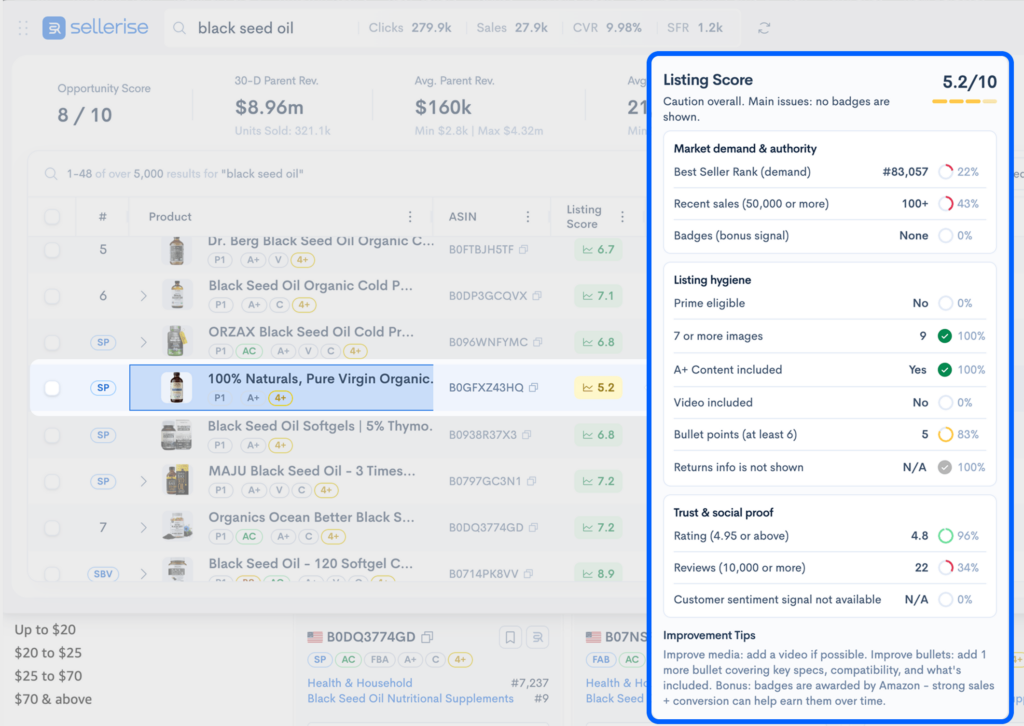
Review the listing score and listing quality of top sellers. Look for weaknesses such as:

  • weak bullet structure
  • poor title clarity
  • low-quality or repetitive images
  • no video
  • weak A+ content
  • poor information hierarchy
  • missing trust-building elements
Sellerise Chrome Extension listing score analysis panel showing Amazon product strengths, weaknesses, and improvement tips

A product can make very good money and still have a weak presentation. In fact, that is often one of the best scenarios: proven demand with mediocre execution.

A listing score helps you see this faster. Instead of manually auditing every detail from scratch, you get a structured view of how polished or unpolished the current offers really are.

If top sellers are converting despite weak communication, that gives you a path forward: better visuals, stronger positioning, sharper titles, improved image sequence, more trust, and clearer benefit framing.


Step 8: Read Reviews to Understand What People Value

This is where product research becomes product strategy.

Revenue tells you people buy. Reviews tell you why they buy and why they complain.

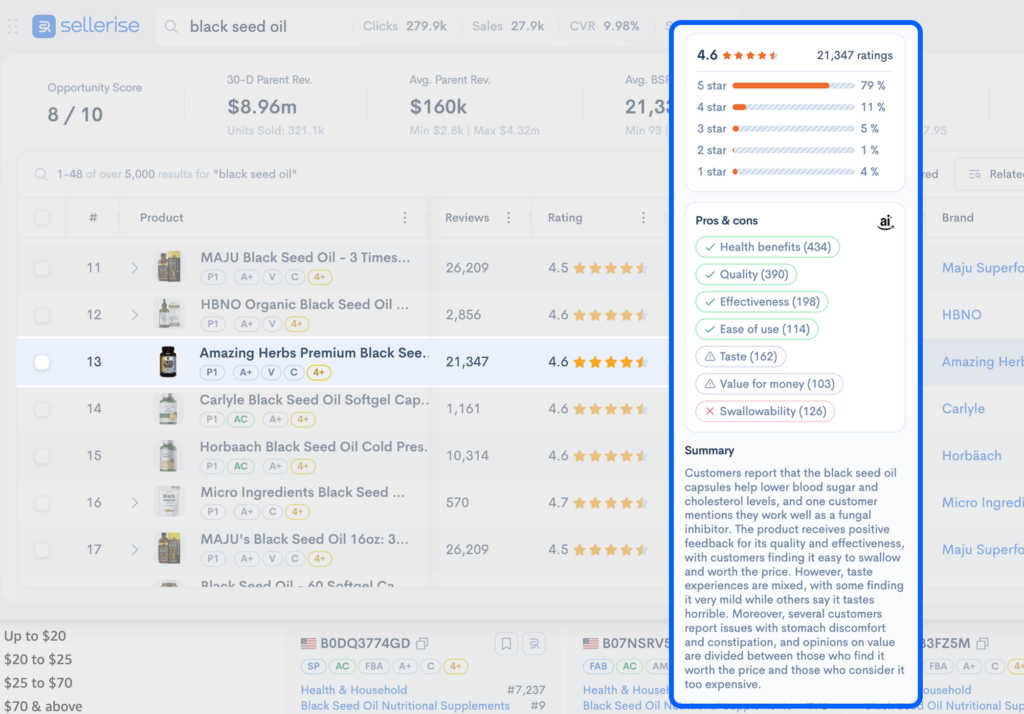
Go through review insights and look for repeated patterns in:

  • what buyers consistently praise
  • what they repeatedly complain about
  • what expectations are not being met
  • what use cases come up often
  • what product limitations feel avoidable
Amazon review analysis with star rating breakdown, pros and cons, and customer sentiment summary in Sellerise.

This step is critical because real differentiation usually comes from customer language, not brainstorming in a vacuum.

For example, review analysis may reveal:

  • customers love the health benefits or effectiveness
  • they care about value for money
  • they specifically want a certain quality attribute
  • they complain about size, taste, noise, durability, or ease of use

Sometimes one complaint can immediately expose a product improvement opportunity. A supplement listing, for example, may be performing well overall but still get repeated complaints about capsule size being too hard to swallow. That tells you the market exists, but execution can still be improved.

That kind of feedback helps shape:

  • product design
  • packaging claims
  • serving format
  • positioning
  • messaging
  • feature priorities


Step 9: Identify the Product Attributes Buyers Already Expect

By this point, you should know not just that people buy the product, but also what they expect from it.

This is where a lot of sellers make a mistake. They jump straight into “what can I add?” before defining the baseline the market already expects.

Before thinking about differentiation, first identify the core attributes that seem non-negotiable in the niche.

These often come from a combination of:

  • keyword modifiers
  • packaging claims on page 1
  • review language
  • repeated product descriptions across top listings

Depending on the niche, those expectations may include things like:

  • organic
  • cold pressed
  • vegan
  • non-GMO
  • sugar-free
  • BPA-free
  • fragrance-free
  • travel-sized
  • extra strength

These are not always differentiators. Often, they are simply table stakes. If most strong listings already include them, your product may need them just to be considered credible.

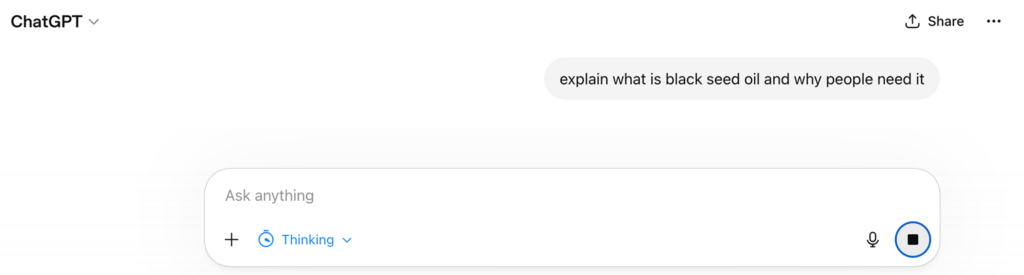
You can use different resources to analyze the product and why people buy it. For example, AI tools will help you to understand the product better and faster.

ChatGPT screen with the prompt asking to explain what a product is and why people need it.

This step helps separate 2 things:

  • what your product must have to compete
  • what you can add to stand out

That distinction matters.


Step 10: Look for Specific Areas Where You Could Be Better

Now ask the most important question in the whole process:

Where exactly could my product be better?

This is the point where research turns into decision-making.

Could you improve:

  • product design?
  • size or usability?
  • the ingredient mix or feature set?
  • packaging clarity?
  • positioning for a more specific audience?
  • the visual brand presentation?
  • the number of units or format?
  • the main marketing claim?

A niche with demand but no obvious path to improvement is often harder than it looks. You may just end up becoming another seller in a crowded market.

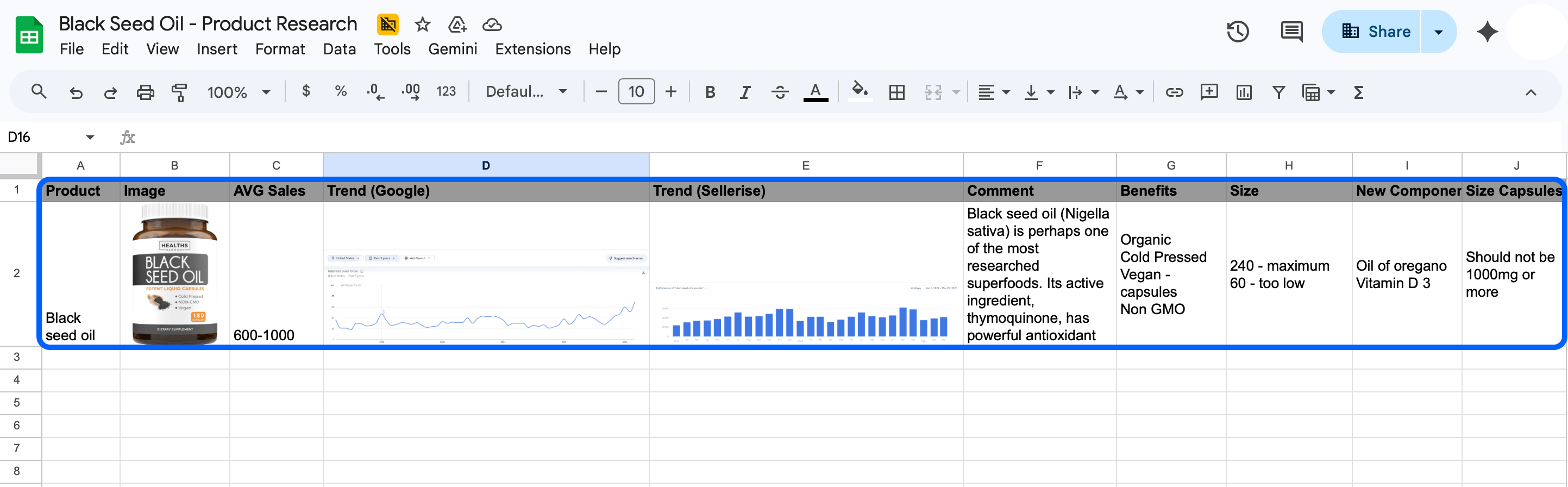
To simplify the process, you can make notes on what you find and what you could improve.

But if you can clearly see where the current offers are weak, that is where opportunity appears.

Good signs include:

  • repeated complaints you can realistically fix
  • listings that sell well but communicate poorly
  • weak visual branding across top competitors
  • product formats that feel outdated or inconvenient
  • offers that do not fully match what buyers are searching for
  • room to improve volume, serving format, packaging, or quality cues

This is where you stop thinking like a seller and start thinking like a product developer.


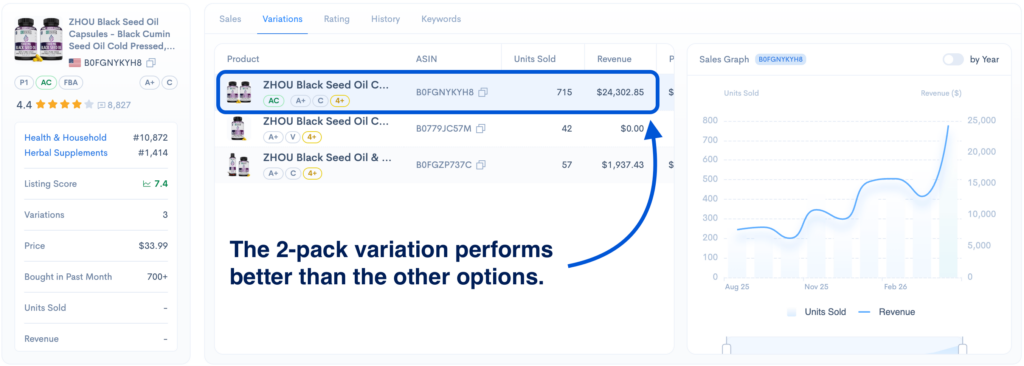
Step 11: Analyze Variations and Product Forms

A niche is not always a single product type. Sometimes what looks like one niche is actually several competing formats inside the same search results.

That is why it is useful to look at:

  • child ASIN variations
  • product forms
  • pack sizes
  • serving counts
  • ingredient combinations
  • bundled or enhanced versions

This helps you answer 2 important questions:

  1. Is demand concentrated in one format?
  2. Are there gaps in what buyers are being offered?

Sometimes the opportunity is not creating a totally different product. Sometimes it is choosing the right version of the product to research further. For example, one market may contain oils, capsules, and gummies, but only one of those forms may show strong demand and broad sales distribution.

Variation analysis can also reveal whether the visible success of a listing comes from one dominant version or from a broader catalog strategy.

Sellerise product variation dashboard showing a product variation outperforming other options in revenue and units sold.

Step 12: Estimate Whether the Product Can Be Sourced Profitably

A product is not a real opportunity unless the economics make sense.

Once you have a promising concept, check approximate sourcing cost before getting too attached to it.

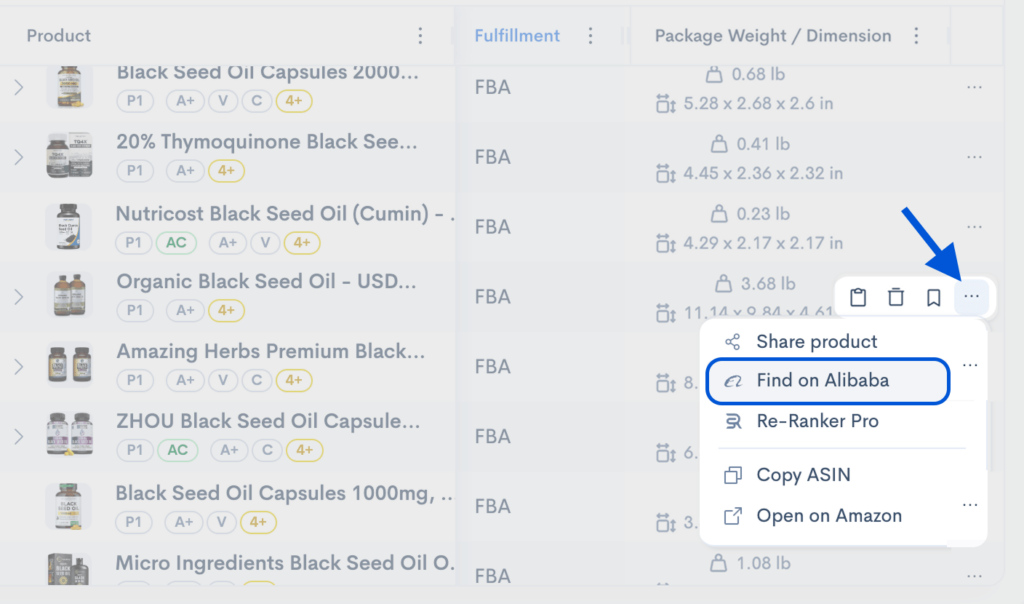
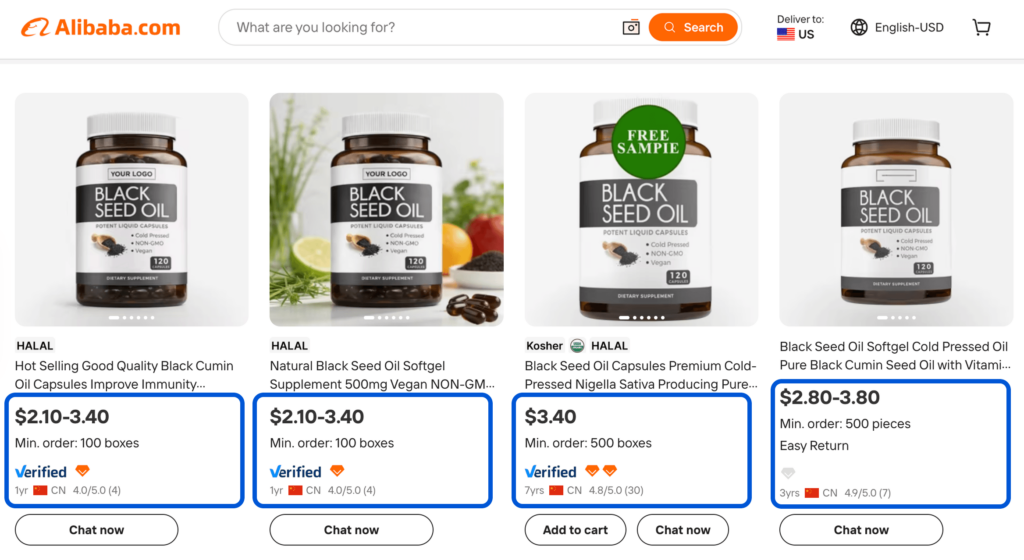
If you are researching inside Sellerise, use the Alibaba shortcut to quickly explore similar products and get a rough sense of manufacturing price.

Sellerise Chrome Extension menu with Find on Alibaba option highlighted for supplier discovery

This does not replace supplier negotiation, but it answers a critical early question:

Is this even in the right cost range to work?

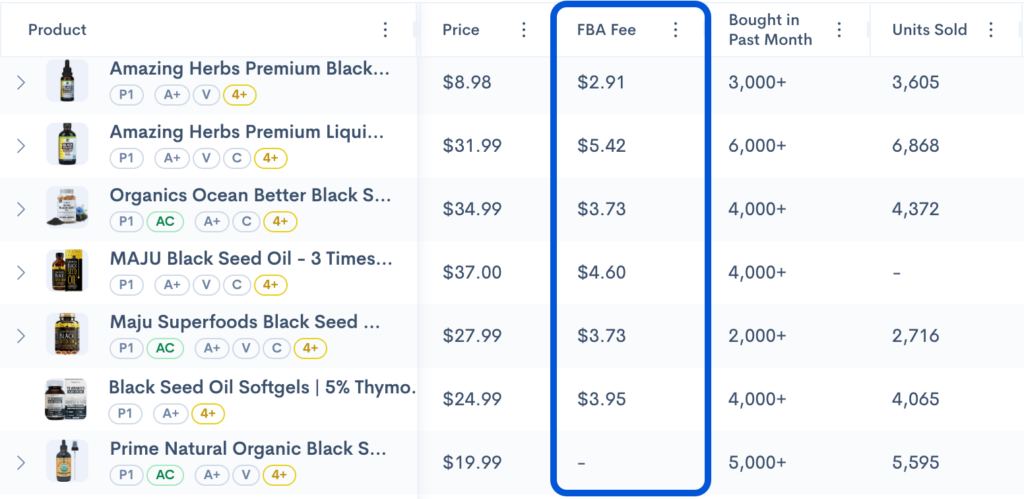
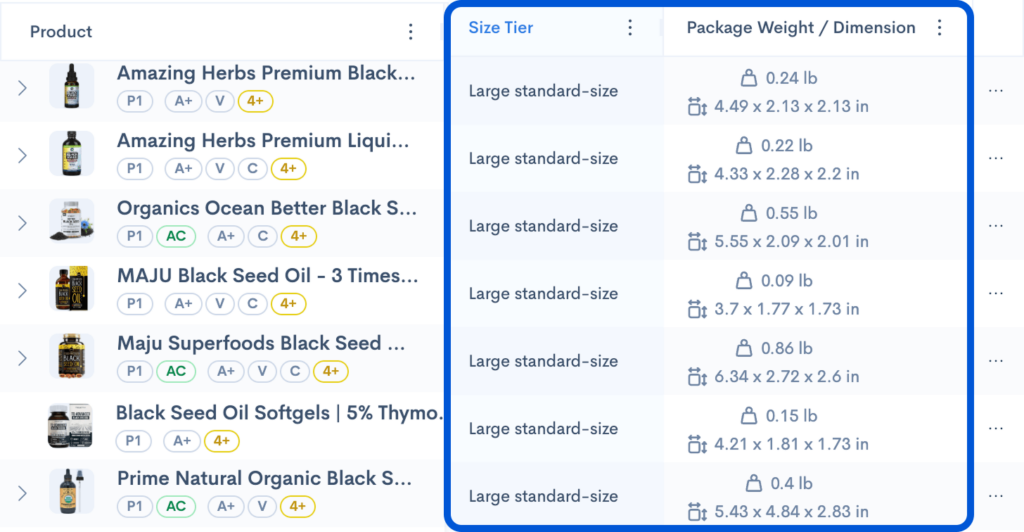
At this stage, compare:

  • approximate manufacturing cost
Alibaba search results for a product with product prices, minimum orders, and verified supplier information.
Sellerise product table showing product listings with price, FBA fee, bought in past month, and units sold metrics.
  • packaging complexity
Sellerise table displaying products with size tier, package weight, and package dimensions data.
  • landed cost risk
  • room for upgrades or bundling

A product can look attractive until you realize margin disappears once sourcing, packaging, and fees are factored in.

And in some niches, the final decision may depend heavily on what kind of raw material, supplier quality, or specification you can actually secure. If the market only works with a strong cost structure or a better-quality input, that should be part of the decision now, not later.


Step 13: Check Keyword Performance to Understand Buyer Intent

A product can look attractive at the market level, but you still need to know how buyers find it.

That is where keyword performance matters.

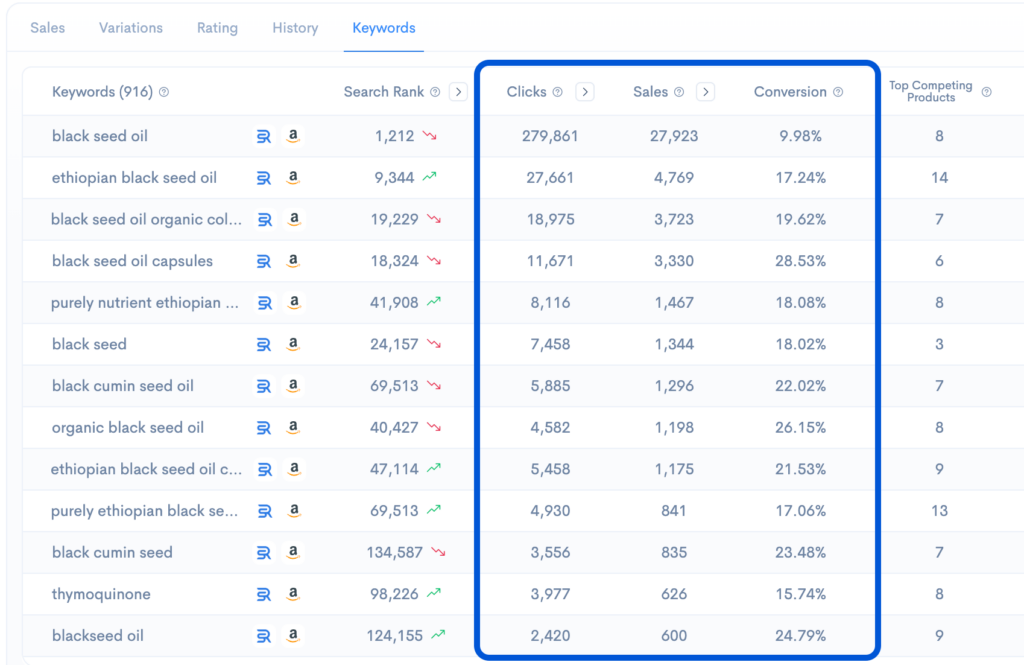
Review the keyword data of strong listings and look at:

Sellerise keyword analytics table for a product showing clicks, sales, conversion rate, and top competing products.
  • ranking by term
  • how broad or specific the demand is
  • which modifiers actually influence conversion

This tells you what shoppers care about and how tightly defined the niche really is.

For example, a broad keyword may drive traffic, but a more specific keyword may convert better because it reflects stronger purchase intent. 

That kind of insight can shape:

  • product positioning
  • core angle
  • title structure
  • image messaging
  • future PPC and SEO decisions

Keyword research is not just for listing optimization later. It helps you understand whether the product idea itself matches how customers buy.


Step 14: Decide Whether to Go Deeper or Move On

By now, you should have enough information to make a real first-pass decision.

Move forward if you see:

  • proven demand
  • stable or improving sales
  • healthy product economics
  • multiple sellers getting traction
  • low-review entrants already winning
  • clear listing weaknesses
  • repeated customer complaints you can fix
  • realistic room to differentiate

Move on if you see:

  • weak revenue across the niche
  • declining or unstable sales trend
  • demand concentrated in one seller only
  • top listings already highly optimized
  • no obvious path to improve the offer
  • margins that look too tight after sourcing and fees

This is important: product research is not just about finding reasons to say yes. It is about finding reasons to say no early, before you waste time and money.

Note: If you want to start with a payment-free workflow first, read our free Amazon product research guide.


Final Thoughts

Amazon product research does not need to be complicated, but it does need to be logical.

Start with the right keyword. Validate that the niche is alive. Scan the market visually. Check whether sales are distributed. Confirm the trend is stable. Look for low-review sellers already gaining traction. Analyze where current listings are weak. Read reviews carefully. Then sanity-check the product economics before going deeper.

That sequence matters.

Sellerise Team, Contributor

Ready to scale your Amazon business?

Free 7 days trial. No Credit Card Required.